
February 9, 2026
Self-Defense 101
The best self-defense is to not get into the fight in the first place. Simple, right? Well, so is saving money. Just don’t spend so much. And so is losing weight. Just stop snacking and exercise more. And so is being a patient driver…just don’t drive in Greenville. Or Atlanta for that matter.
But anyway, you get the point. Simple doesn’t mean easy. In fact, the greatest truth about life is that simple (foundational) truths are everywhere ignored precisely because they require discipline. And we really don’t like that. I mean, I’m 56 years old and I don’t like being told what to do anymore than your average 8 years old-old. I’m just better at regulating my emotions…well, so long as I’m not stuck in traffic on interstate 85 in Greenville or Atlanta.
This gets to the heart of the matter. Self-defense isn’t merely about technique but about emotional control, realistic prevention strategies, and predetermined responses to types of scenarios. To the last part allow me to simply say: our conviction arrived at long before any altercation or conflict must be that we’ll only use force in the event that it’s unavoidable.
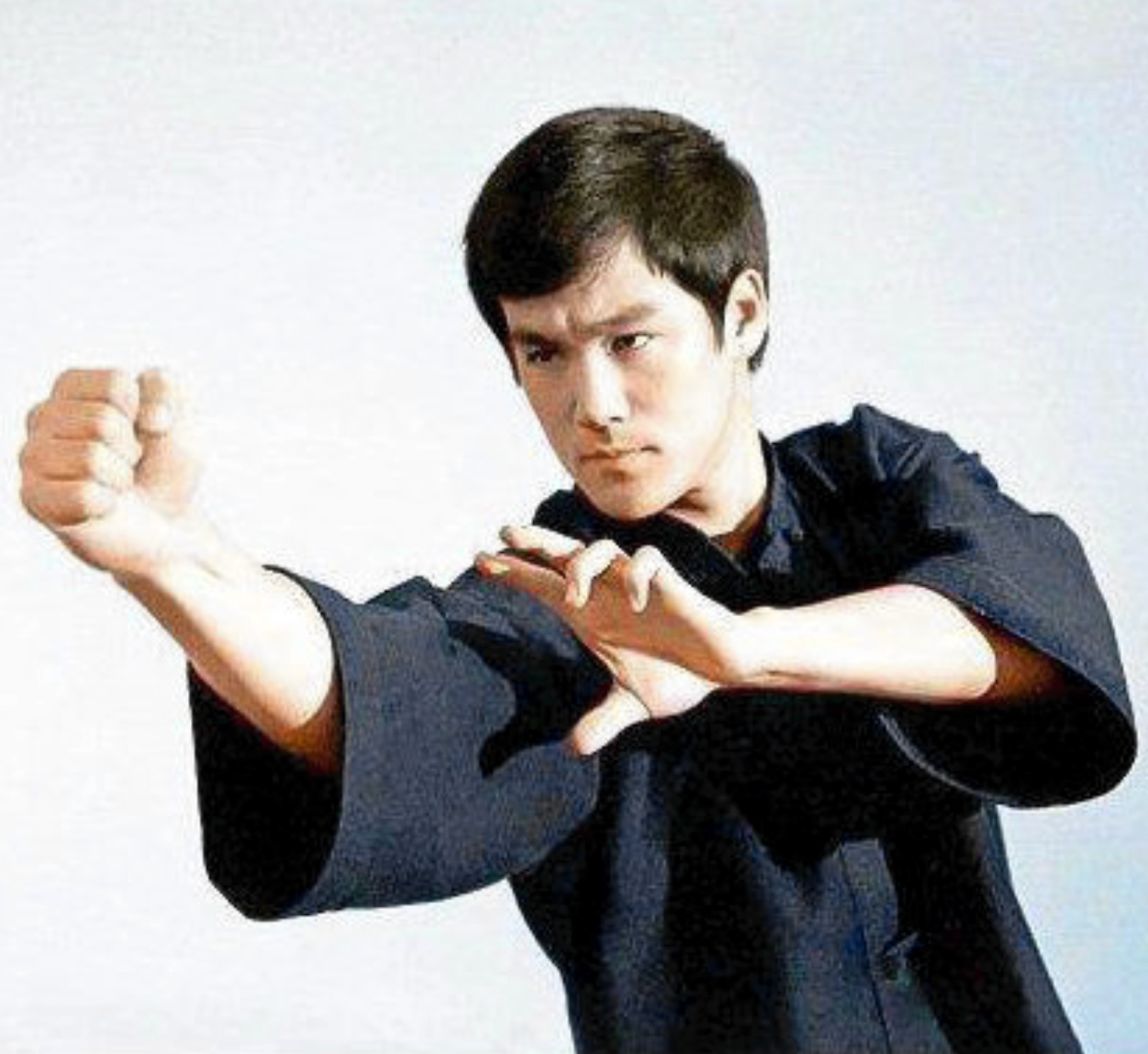
Bruce Lee’s philosophy of Jeet Kune Do was simply to simplify. I just absolutely love that! Without reservation. It’s Occam’s Razor applied to self-defense and, for that matter, the rest of life. But to simplify we must do some thinking ahead of time. In other words, we need to accurately identify the foundational truths of the issue and then, critically, reason forward from there. To that end, JKD’s main goal is to stop an attack with a stop-hit. In other words, attack the attack. Cut it off. Don’t play defense.
Like most of history’s great ideas, the stop-hit is brilliantly simple. There are no extraneous parts that unnecessarily complicate matters. But, like all great and simple truths, man is forever busy with mucking the whole thing up because simple doesn’t mean easy.
In fact, simple is always harder than we think.
The idea of the stop-hit is the foundation of smart fighting. It’s to hit the enemy on the way in. It’s to use their attack against them so that we don’t fight against their strength but weakness. All great generals have used versions of this. Sun Tzu, who knew something about warfare (and got seriously screwed on royalties for his masterpiece, by the way), was all for it. Get at the enemy when he’s crossing the bridge and before he’s fully set. Heck, The Terminator was basically a sci-fi JKD film. The cyborg is sent back in time by Skynet in order to kill its mortal enemy, John Connor. But Skynet does one better than your usual stop-hit. They use a time machine and a homicidal robot to go and find and kill John Connor’s mommy! Now that’s a stop-hit!
Of course, time-machines and homicidal robots are expensive so we’re stuck working on punches and kicks.
Okay, so how do we work on the stop-hit and make sure it’s a combat ready tactic for us? Glad you asked. We use two primary drills that are indispensable and, if misunderstood and improperly trained, will cause one’s JKD to be utterly useless. That’s right. Useless. Because JKD without stop-hitting is like pizza without cheese. Or a sandwich without bread. Or my like my mother-in-law with good driving skills. A pure contradiction in terms.
Anyway, square off on a heavy bag opposite a training partner. The initiator is just past arms-reach while the stop-hitter is able to score a solid, full-extension jab/straight lead without having to move. The idea is for the attacker to move forward suddenly and attempt a solid jab before the stop-hitter can react. This makes it a fun and highly efficient drill for both parties. The initiator learns to move without predictability or telegraph and endeavors to fire the hand first, then foot, in the kinetic chain of attack. The responder, of course, works on the pure stop-hit.
It’s essential that the stop-hit is practiced against forward motion. The essence of the Jeet is to hit the enemy as they “enter the room” so to speak. The stop-hit jab is the most basic JKD technique/tactic in that it catches the enemy coming in, thereby adding considerable force to the blow. The side stop kick can also be used. It’s a devastating weapon when the enemy runs his knee into it. Both the stop punch and kick should be practiced diligently.
The goal is for the stop-hit to score slightly before the initiator’s blow.
Once the stop-hit trainee has the hang of the technique and reliable timing, he should begin to focus on putting power into the blow. Initially it’s fine to merely make contact, but in real fighting we must have enough pop to literally stop the attacker in his tracks. An ill-timed and/or weak stop-hit will cause you to jettison JKD for another system altogether.
The trainee can also add positional variables to the stop-hit as well, such as changing their head position as they deliver the punch. This is a necessary tactic when dealing with taller fighters. At advanced levels, the stop-hitter can use pivoting footwork as they counter-punch so as to include evasiveness and add more power to their blow. For the stop-kick, if you’re super quick, you can slide the rear foot to deliver the blow rather than merely leaning back and jolting the enemy with the kick only. But, again, these should only be added after the student has consistently trained the most basic and common versions.
It’s easy to make a mistake at this point and think that it’s only the reacting partner that’s training the stop-hit. In fact, the initiator who’s bursting forward using the “trigger-step” or “push-shuffle” jab, is working on closing the gap in order to stop-hit an opponent who’s off-set but at the distance. The idea is to burst forward and catch the enemy when he’s disorganized and gathering his attack. In this we get a glimpse of JKD’s organizing tactical ethic, which is to never attack a set-opponent. JKD is a straight-hitting system built on countering and feints so as to avoid brawling style exchanges.
Another drill involves focus mitts. In this case, the partners stand at the rim of the fighting measure. One partner, preferably with a focus mitt on his rear hand, steps forward and the reacting partner stop-hits. This requires more skill and accuracy, but is much more true to life in that the distance and angle of the stop-hit is more realistic than on the heavy bag. An even more advanced version adds light footwork to the intercepting mitt drill. The initiator can vary which line is open – high (stop-punch) or low (side-kick).
Another “drill” and, yes, we mean drill, is light sparring. There are a million “games” you can play with sparring. The thing to remember is that sparring isn’t a fight and going full-contact is dangerous business. We recommend doing light-contact sparring drills with basic protective equipment (mouthpiece, regulation sparring gloves, headgear). An invaluable skill for self-defense is accuracy and this is the main thing developed in sparring. We lean heavily on “basic boxing” style sparring where the jab is emphasized. Until you’ve done this you simply won’t realize how hard it is to land a jab.
More so than with any other drill, sparring requires professional coaches/instructors who can either participate directly and/or monitor the activity. Egos and immaturity can quickly turn light sparring into a raging inferno of competition. The idea is to work on timing, accuracy, generalship and tactics. While the stop-hit isn’t often the centerpiece of light sparring due to its nature, gaining these aforementioned qualities improves one’s ability to quickly and accurately counterattack in a real self-defense situation.
The key to every drill is to keep it simple by always keeping the main goal in mind. Stop-hitting is a fine tuned craft that requires careful attention and logical drilling. It’s the heart-and-soul of morally correct self-defense. You aren’t trying to “win” a fight…you’re forced to defend yourself from an inevitable attack. In all, it’s simple, yes, but not easy. It requires careful study and tons of safe reps.