
March 6, 2026
The Best Jeet Kune Do Books of All
In today’s guest column by Seth Raymond you’ll learn not only why the four volume set “Bruce Lee’s Fighting Method” is the best Jeet Kune Do book out there, but why. Seth is a brilliant young man whose careful study of self-defense violence has yielded that great and rarest fruit: wisdom. That being said, he understands what so many miss and that is the supremacy of simplicity. This is why the Fighting Method series is so special. It presents, we believe, the truest expression of self-defense truth out there. That’s what Seth breaks down for you, the reader – and with brilliant simplicity too.
We add that a parent out there in internet land who types into the search bar, “Kid’s Karate” or “Self Defense school” in Greenville (for that’s where Greenville Academy of Martial Arts is, after all), does well to go over to Amazon and pick up a copy of this book series. It’s worth it for the reasons that Seth explains. Just having a copy for yourself will do wonders in protecting your mind from the great fallacies of complexity. Things get confusing out there because too many instructors fail to keep the main thing the main thing. Bruce Lee didn’t commit that philosophical crime and neither should you. So, without further ado, here is Seth’s column:
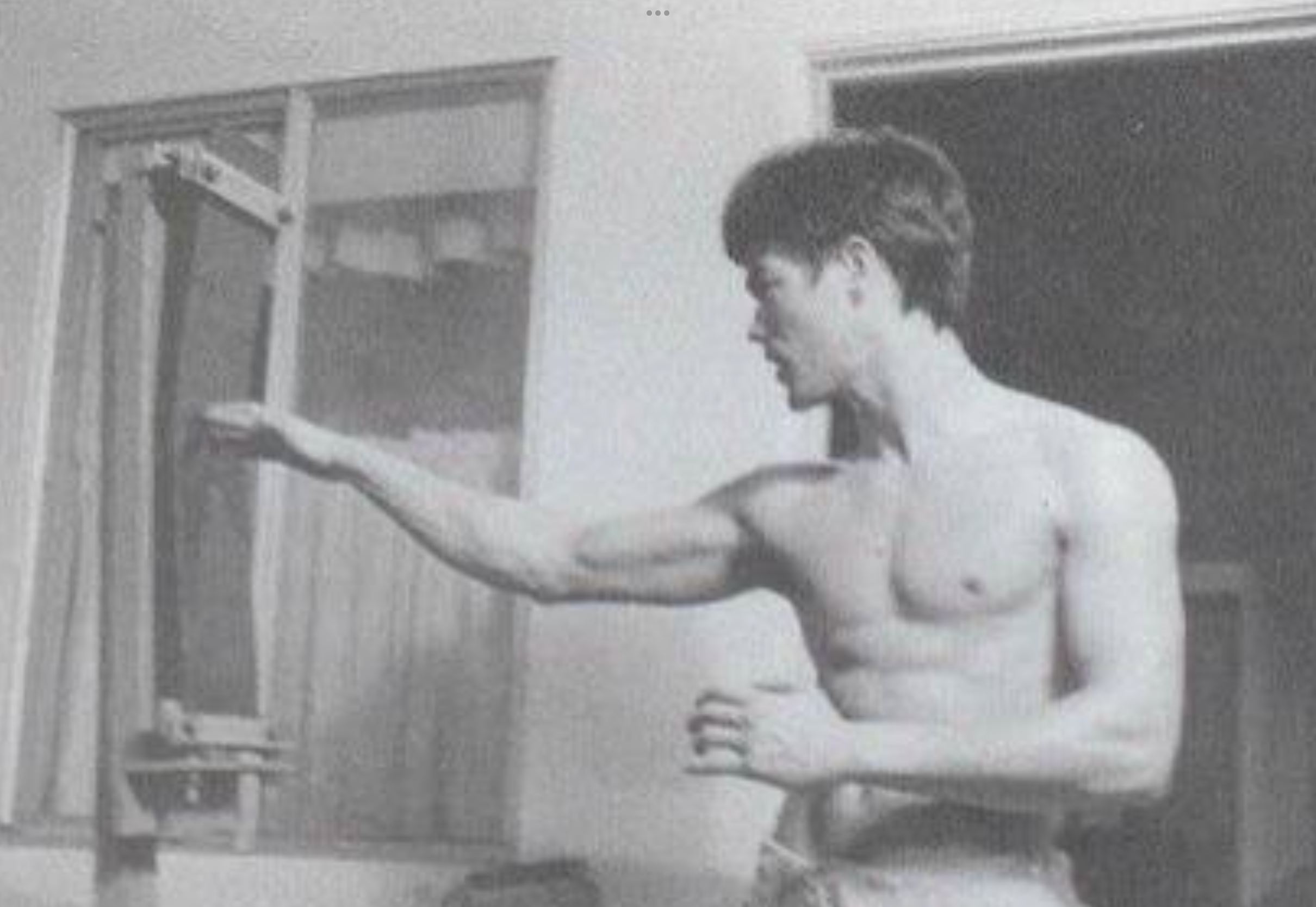
The Bruce Lee’s Fighting Method series holds a legendary status because it captures Bruce Lee’s philosophy in its most distilled, practical form.
To understand why many practitioners consider these volumes the “truest” form—and why they find modern interpretations overly complex—we have to look at the evolution of the art.
Why the Four Volumes are Seen as the “True” JKD
The primary reason these books are revered is their focus on simplification. Bruce Lee famously said, “Jeet Kune Do is simply to simplify.“
- Direct Lineage: These volumes were created using photos and notes Bruce prepared himself before his death. They represent the “Los Angeles Chinatown” era, which many consider the peak of his personal combat efficiency.
- The Focus on “Non-Classical” Movement: The books don’t waste time on flowery forms or “what-if” scenarios. They focus on the Stop Hit, the Lead Straight, and basic footwork.
- Universal Mechanics: Instead of teaching 1,000 techniques, the volumes teach 5-10 movements that work in 1,000 situations. This aligns with the JKD core principle of “economy of motion.”
The “Complexity” Problem in Other Forms
When people talk about other forms of JKD being “too complex,” they are usually referring to JKD Concepts (as opposed to Original JKD). Here is where the friction lies:
- The “Accumulation” Trap
Many modern schools treat JKD as a “best of” martial arts collection, adding Muay Thai, Brazilian Jiu-Jitsu, and Silat. While Bruce encouraged exploration, the core of JKD is about subtraction. If you have to remember 50 different entries for a single punch, you’ll experience “analysis paralysis” in a real fight. - Loss of the “Centerline”
Original JKD relies heavily on modified fencing and boxing mechanics. Some complex modern interpretations bring back the very “telegraphic” movements Bruce sought to eliminate, making the fighter slower and more predictable. - Training the “Attribute” vs. the “Technique”
The four volumes focus on attributes (speed, power, timing). Some modern systems focus on complex techniques (long sequences of traps and strikes). In a high-stress environment, fine motor skills and complex sequences are usually the first things to fail.
The Counter-Argument (A Gentle Reality Check)
While the books are the “purest” record we have, it’s worth noting that Bruce Lee viewed JKD as a living process, not a fixed set of four books.
He likely would have continued to evolve. The “complexity” in other forms often comes from trying to deal with modern threats (like high-level ground grappling) that weren’t as prevalent in the 1960s. The danger isn’t necessarily the complexity itself, but the loss of the “Directness” that the four volumes preach.
Key Takeaway: The four volumes are the “truest” because they prevent the practitioner from “cluttering” their mind. They provide a blueprint for a functional, lean fighting machine.
- Seth Raymond.
Get My Free Pass
February 9, 2026
Self-Defense 101
The best self-defense is to not get into the fight in the first place. Simple, right? Well, so is saving money. Just don’t spend so much. And so is losing weight. Just stop snacking and exercise more. And so is being a patient driver…just don’t drive in Greenville. Or Atlanta for that matter.
But anyway, you get the point. Simple doesn’t mean easy. In fact, the greatest truth about life is that simple (foundational) truths are everywhere ignored precisely because they require discipline. And we really don’t like that. I mean, I’m 56 years old and I don’t like being told what to do anymore than your average 8 years old-old. I’m just better at regulating my emotions…well, so long as I’m not stuck in traffic on interstate 85 in Greenville or Atlanta.
This gets to the heart of the matter. Self-defense isn’t merely about technique but about emotional control, realistic prevention strategies, and predetermined responses to types of scenarios. To the last part allow me to simply say: our conviction arrived at long before any altercation or conflict must be that we’ll only use force in the event that it’s unavoidable.
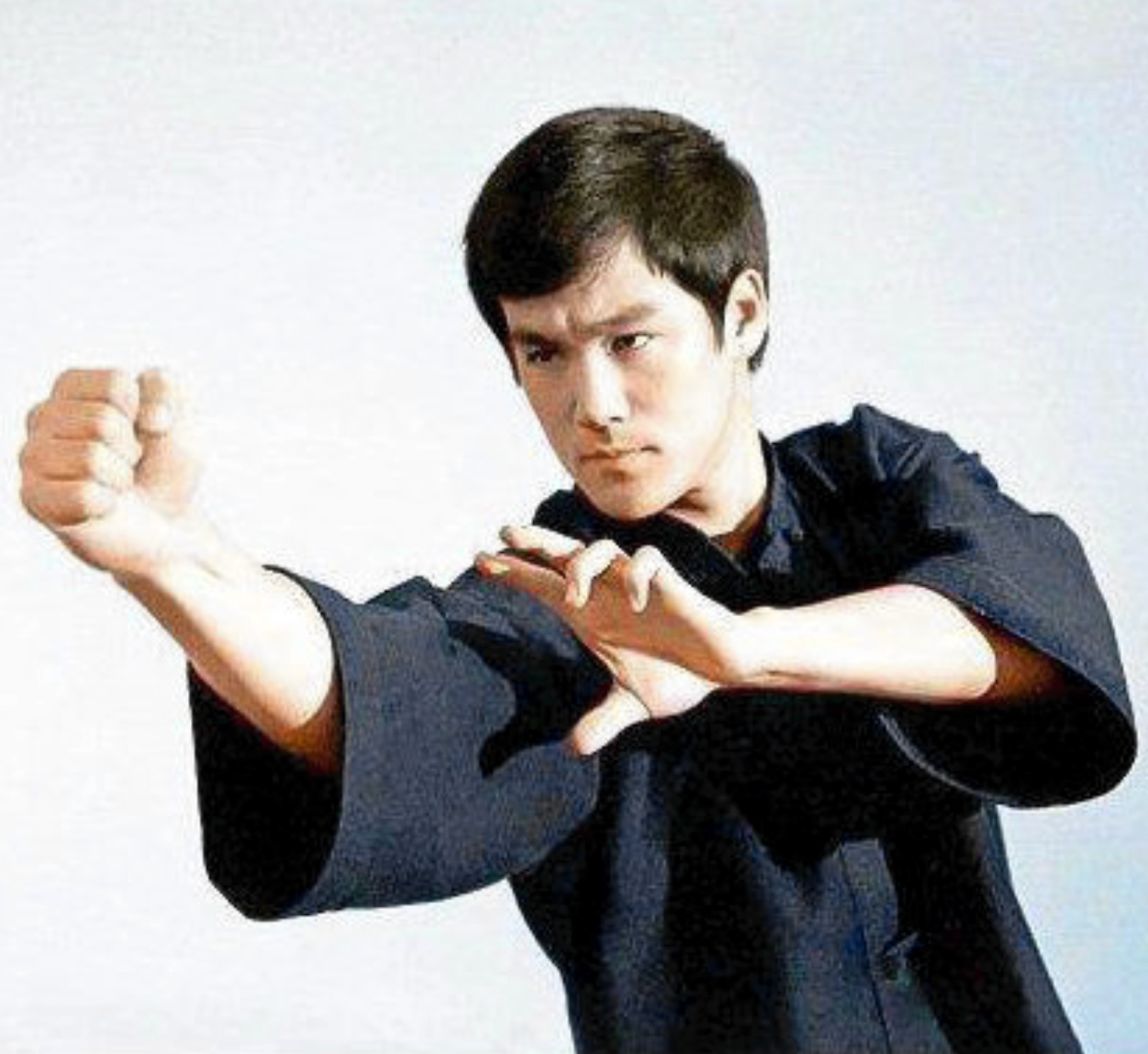
Bruce Lee’s philosophy of Jeet Kune Do was simply to simplify. I just absolutely love that! Without reservation. It’s Occam’s Razor applied to self-defense and, for that matter, the rest of life. But to simplify we must do some thinking ahead of time. In other words, we need to accurately identify the foundational truths of the issue and then, critically, reason forward from there. To that end, JKD’s main goal is to stop an attack with a stop-hit. In other words, attack the attack. Cut it off. Don’t play defense.
Like most of history’s great ideas, the stop-hit is brilliantly simple. There are no extraneous parts that unnecessarily complicate matters. But, like all great and simple truths, man is forever busy with mucking the whole thing up because simple doesn’t mean easy.
In fact, simple is always harder than we think.
The idea of the stop-hit is the foundation of smart fighting. It’s to hit the enemy on the way in. It’s to use their attack against them so that we don’t fight against their strength but weakness. All great generals have used versions of this. Sun Tzu, who knew something about warfare (and got seriously screwed on royalties for his masterpiece, by the way), was all for it. Get at the enemy when he’s crossing the bridge and before he’s fully set. Heck, The Terminator was basically a sci-fi JKD film. The cyborg is sent back in time by Skynet in order to kill its mortal enemy, John Connor. But Skynet does one better than your usual stop-hit. They use a time machine and a homicidal robot to go and find and kill John Connor’s mommy! Now that’s a stop-hit!
Of course, time-machines and homicidal robots are expensive so we’re stuck working on punches and kicks.
Okay, so how do we work on the stop-hit and make sure it’s a combat ready tactic for us? Glad you asked. We use two primary drills that are indispensable and, if misunderstood and improperly trained, will cause one’s JKD to be utterly useless. That’s right. Useless. Because JKD without stop-hitting is like pizza without cheese. Or a sandwich without bread. Or my like my mother-in-law with good driving skills. A pure contradiction in terms.
Anyway, square off on a heavy bag opposite a training partner. The initiator is just past arms-reach while the stop-hitter is able to score a solid, full-extension jab/straight lead without having to move. The idea is for the attacker to move forward suddenly and attempt a solid jab before the stop-hitter can react. This makes it a fun and highly efficient drill for both parties. The initiator learns to move without predictability or telegraph and endeavors to fire the hand first, then foot, in the kinetic chain of attack. The responder, of course, works on the pure stop-hit.
It’s essential that the stop-hit is practiced against forward motion. The essence of the Jeet is to hit the enemy as they “enter the room” so to speak. The stop-hit jab is the most basic JKD technique/tactic in that it catches the enemy coming in, thereby adding considerable force to the blow. The side stop kick can also be used. It’s a devastating weapon when the enemy runs his knee into it. Both the stop punch and kick should be practiced diligently.
The goal is for the stop-hit to score slightly before the initiator’s blow.
Once the stop-hit trainee has the hang of the technique and reliable timing, he should begin to focus on putting power into the blow. Initially it’s fine to merely make contact, but in real fighting we must have enough pop to literally stop the attacker in his tracks. An ill-timed and/or weak stop-hit will cause you to jettison JKD for another system altogether.
The trainee can also add positional variables to the stop-hit as well, such as changing their head position as they deliver the punch. This is a necessary tactic when dealing with taller fighters. At advanced levels, the stop-hitter can use pivoting footwork as they counter-punch so as to include evasiveness and add more power to their blow. For the stop-kick, if you’re super quick, you can slide the rear foot to deliver the blow rather than merely leaning back and jolting the enemy with the kick only. But, again, these should only be added after the student has consistently trained the most basic and common versions.
It’s easy to make a mistake at this point and think that it’s only the reacting partner that’s training the stop-hit. In fact, the initiator who’s bursting forward using the “trigger-step” or “push-shuffle” jab, is working on closing the gap in order to stop-hit an opponent who’s off-set but at the distance. The idea is to burst forward and catch the enemy when he’s disorganized and gathering his attack. In this we get a glimpse of JKD’s organizing tactical ethic, which is to never attack a set-opponent. JKD is a straight-hitting system built on countering and feints so as to avoid brawling style exchanges.
Another drill involves focus mitts. In this case, the partners stand at the rim of the fighting measure. One partner, preferably with a focus mitt on his rear hand, steps forward and the reacting partner stop-hits. This requires more skill and accuracy, but is much more true to life in that the distance and angle of the stop-hit is more realistic than on the heavy bag. An even more advanced version adds light footwork to the intercepting mitt drill. The initiator can vary which line is open – high (stop-punch) or low (side-kick).
Another “drill” and, yes, we mean drill, is light sparring. There are a million “games” you can play with sparring. The thing to remember is that sparring isn’t a fight and going full-contact is dangerous business. We recommend doing light-contact sparring drills with basic protective equipment (mouthpiece, regulation sparring gloves, headgear). An invaluable skill for self-defense is accuracy and this is the main thing developed in sparring. We lean heavily on “basic boxing” style sparring where the jab is emphasized. Until you’ve done this you simply won’t realize how hard it is to land a jab.
More so than with any other drill, sparring requires professional coaches/instructors who can either participate directly and/or monitor the activity. Egos and immaturity can quickly turn light sparring into a raging inferno of competition. The idea is to work on timing, accuracy, generalship and tactics. While the stop-hit isn’t often the centerpiece of light sparring due to its nature, gaining these aforementioned qualities improves one’s ability to quickly and accurately counterattack in a real self-defense situation.
The key to every drill is to keep it simple by always keeping the main goal in mind. Stop-hitting is a fine tuned craft that requires careful attention and logical drilling. It’s the heart-and-soul of morally correct self-defense. You aren’t trying to “win” a fight…you’re forced to defend yourself from an inevitable attack. In all, it’s simple, yes, but not easy. It requires careful study and tons of safe reps.
Get My Free Pass

January 21, 2026
Security & Convenience
By Rusty Starkey
For years, I’ve been telling people that the concepts of security and convenience are mutually exclusive. The more you have of one, the less you can have of the other. For example, prisons are very secure and at the same time very inconvenient. Imagine if just anyone could walk into or out of a prison. What would be the point?
In my line of work, this is a complicated balance that we deal with daily. Most of our clients want security in some form, but they don’t want to have to sacrifice their convenience. Many systems put in place to secure their locations make things much less convenient for their employes and guests. Locked doors, cameras, gates, fences, alarms etc. make their facility more secure, but many of those safeguards are never put in place because they make operations less convenient.
Think about your own life. How often have you been prompted (or even in some cases – forced) to enable 2 factor authentication on some electronic item or account. How annoying is that? You’ve got to put in a username and password or a pin number. Then you’ve got to scan your face or your thumbprint. Sometimes you also have to get a text or email with a verification code and enter all of that just to look at your bank account. Why do I have to do all that stuff just to look at a bunch of zeroes on the screen? Because it is a lot more secure. Is it absolutely secure? No, unfortunately, smarter and dedicated criminals can bypass all those measures in some cases and get into things anyway.
So, what do we do? Forego all those things and just leave everything unsecured or as least secured as possible to make it more convenient, or deal with all of the inconvenience to make it more secure? Ultimately, that’s a decision for you to make based on your values. The great thing about living in a country like ours is that you have the freedom to make those choices for yourself.
Years ago, people didn’t lock their doors to their homes or cars. Is it because there was no crime? No, it was because there was a lot less crime. Also, towns were smaller and less crowded. Everyone knew everyone. If anything happened strange everyone in town knew about it and everyone likely knew who was responsible. There was security bult into our lifestyles. People were more connected socially. People were outside more so they saw who was out moving through the neighborhood and looking around at the Joneses’ house for too long.
We live in a different time. Things are not how they used to be and people are not as connected to each other anymore. We are connected through phones, and social media, and apps, video doorbells and security cameras. We have greater levels of security but at the cost of less convenience. And to an extent, at the cost of more freedom.
See, that’s another aspect of this idea of security vs convenience. Security vs. freedom.
As a country, or a community, to make things more secure, we are required to give up a certain level of freedom. That’s a different article for a different day but consider how our lives have been affected by this concept.
This year marks the 25th anniversary of the 9/11 terrorist attacks on the US. In that time, air travel has changed greatly. TSA checks, searches, x-ray scanners, air marshals, no fly lists, and more have made flying a much less convenient way to travel. And on top of this loss of convenience, we have essentially lost some freedoms. And we have definitely lost more privacy. That’s just one example. There are many more.
And that’s the real question to ask yourself. When considering how much security you want vs. how much convenience you like, or how much freedom you are willing to lose weighed with how much privacy you can comfortably give up, what do you value? That’s what you need to understand to make those decisions.
Perhaps in a future article I will explore that idea further. Plenty of recent events have made that question imperative. The military action in Venezuela, the ICE involved shooting of an American citizen, even the mass killings of Iranian protestors by their own government. Freedom isn’t free as the saying goes. How hard do we want to fight for it to keep it? Thomas Jefferson once said, “When you abandon freedom to achieve security, you lose both and deserve neither.” Another quote that is sometimes attributed to Jefferson is, “Freedom is lost gradually from an uninterested, uninformed, and uninvolved people.” Let us not be those people who allow freedom to be lost on our watch for the sake of security, or out of fear.
Rusty Starkey
Senior Instructor in Cornerstone Jeet Kune Do
Former Law Enforcement Officer
Security Professional
(We’re delighted to provide the best self-defense instruction we can at Greenville Academy of Martial Arts. Greenville, South Carolina is definitely growing and that means more traffic and, yes, crime. Sifu Rusty, through his many years as a police officer and security professional, is an expert in helping you understand not only the techniques and training of self-defense, but the legal and social realities too. This balance is critical because self-defense isn’t a sport and it doesn’t do you any good to defeat an attacker but end up in a boat-load of legal trouble because of it. Understanding the principles of self-defense law and application taught here at Greenville Academy of Martial Arts will keep you safe from both the bad guy and the prosecutor.)
Get My Free Pass
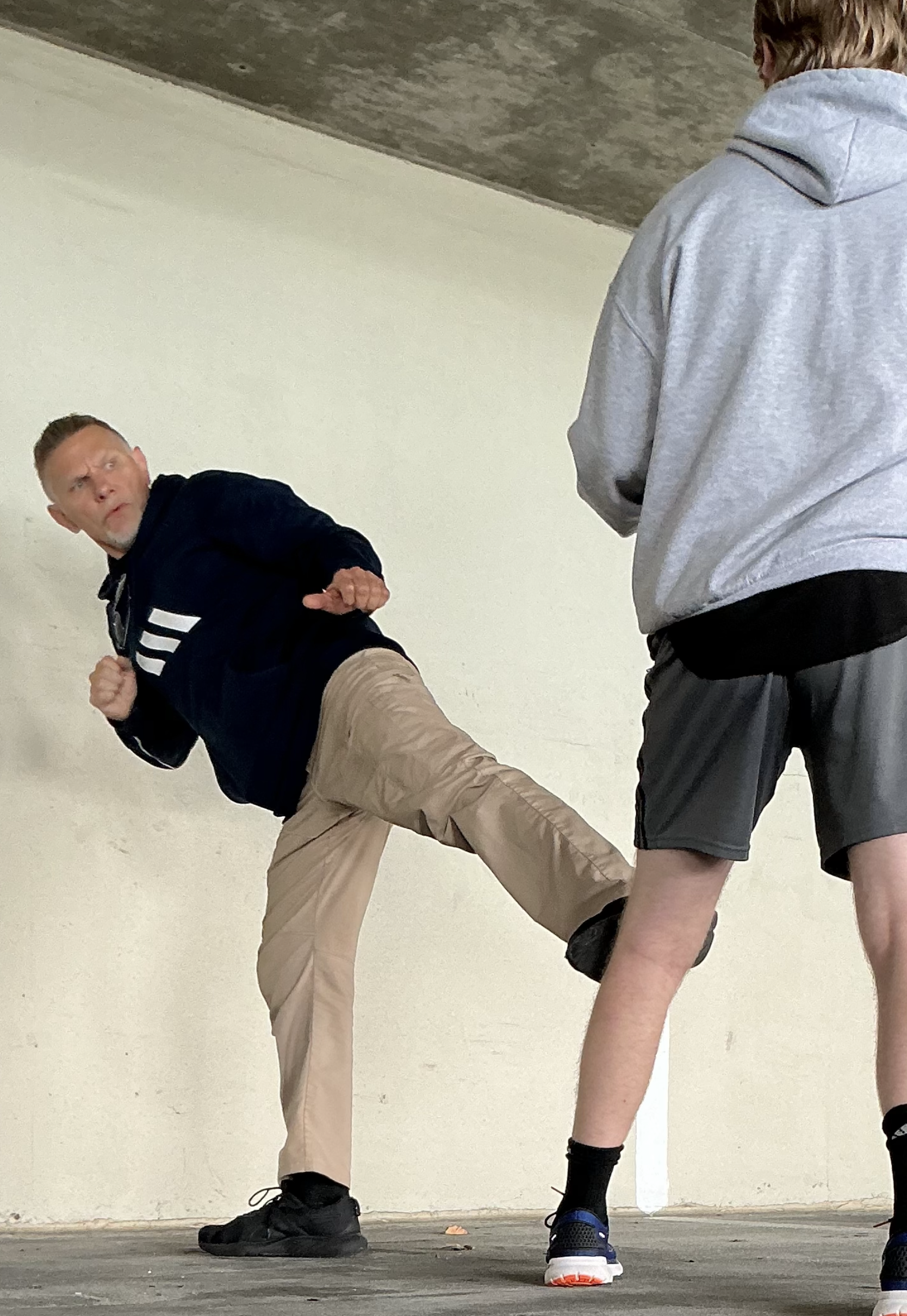
January 1, 2026
Self Defense or Assault? What Are You Really Training?
What good does it do to defend yourself against an attacker but later end up in jail?
Or, to defend yourself in “the street” but end up blowing through your life’s savings defending yourself in court? Lawyers are sort of expensive in case you didn’t know. They have to pay for all that law school.
The thing is, a good many self-defense schools never touch this subject. As in not once. As in never. You can go from white to black belt and yet avoid any reference at all to legality, self-defense law, Castle Doctrine, Stand Your Ground (SYG), Duty to Retreat, and, indeed, Civil Immunity. (Of course, if you’re reading this and live in Europe this is futile because we all know you can’t defend yourself at all over there…just take your beating and hope you aren’t seriously injured).
This is a curious omission. A martial arts school is ostensibly a self-defense school, right? But it’s here that the brutal truth is revealed.
They are not, in fact, schools of self-defense!
What are they instead? Sport combat schools. Historical clubs reenacting ancient combat training. Fitness clubs.
I know this sounds harsh but, truth be told, your life and liberty really do depend on this.
A good many “practical” schools these days (read that: MMA-based) boast about how theirs is the only stuff that works. They deride and mock traditional systems. There’s a local MMA school in here in my hometown, Greenville, South Carolina. A student there was in a fight on Main Street one very early morning. Under pressure he did what he was trained to do. He shot a double-leg, executed the takedown, achieved the mount, then rained down some glorious “ground-and-pound” on the now hapless opponent.
Total domination.
Success.
He won.
Well, not so fast.
He wasn’t on a mat. He didn’t have gloves on. Oh…and his opponent didn’t tap.
He died.
Yes, died. Right there on Main Street in beautiful downtown Greenville over what, no one remembers. What we do know (and remember) is that a 50-something year old man no longer walks the earth and the “victorious” MMA-trained fighter, at the time in his mid-20’s, is in jail for manslaughter. Do you think the local school has a photo of his mugshot on the wall along with their trophies? Do you think they ever even mention it in their free trial classes?
Lest you think this is harsh, consider the bleak reality of a young man losing his liberty and all that entails due in large part because he literally did what he was trained to do. Imagine what his family has had to endure! Sure, you might say that maybe he would have killed someone even without the MMA training. But even if that were true it doesn’t change the fact that his training made him a better murderer.
This isn’t to say that traditional schools are immune from such barbarism (and, yes, to train people to fight rather than defend is savagery sold in monthly memberships). Any institution that trains the use of force without the moral and legal foundation for self-defense is a gang. The whole idea of the Department of Motor Vehicles is so that society at large has the reasonable expectation that someone hurtling through space at high speeds in a two ton machine on wheels is aware of safety laws. Likewise, a concealed carry course is concerned with both our safe handling of a firearm and our basic understanding of the legal use of it. Learning to fire a handgun while being ignorant or indifferent to the moral and legal premises of self-defense is an appalling contradiction.
A martial artist is, at least in theory, a human weapon. Like any weapon, it must be “carried” with due diligence. At Greenville Academy of Martial Arts, we take this seriously. A self-defense student should be exactly that. If they’re training here at our school in Greenville, it’s our responsibility to, well…you know…not unleash a volatile weapon upon the city we love.
We can carry the analogy further. A person taking a basic self-defense course is akin to someone getting a concealed carry permit. A black belt (or expert) is akin to a professional, i.e., police, military, private security. Can you imagine a police officer who has no training whatsoever in the lawful use of his/her firearm? To this end, and to switch the analogy a bit, a martial art school devoid of self-defense moral law and its legal realities is a malpractice suit waiting to happen.
To be clear, in light of all that, a martial artist is trained in self-defense. Self-defense is the art and science of keeping oneself as safe as possible in the event of unavoidable violence. Self-defense violence is, therefore, morally and legally justified insofar as it protects the defender from attack. The amount of force used by the defender must be commensurate with the threat at hand and once the threat is over, so must the counterattack.
In every state in America (including here in Greenville, South Carolina) this is the philosophical basis of self-defense law. Of course, states vary in the legal application of this philosophical theory and, life being messy at times, there are always contextual issues at hand. A self-defense instructor is morally obligated to teach all this parallel to the physical training. The teaching and training of the techniques of violence must only be taught in the moral light of self-defense law.
For example, I can’t claim self-defense if I instigate the confrontation in some way. And this is where we need to be appraised of our legal responsibilities. The knuckle-headed saying “I’d rather be judged by 12 than carried by six” is generally used in lieu of objective reasoning. It’s often the bluster of ill-formed intellects trying to sound tough. No thinking person would ever utter such a statement devoid of all context. Especially to students to whom the landscape of self-defense law is badly lit, lying mostly in shadows.
Many states have “stand your ground” laws. This means you don’t have a duty to retreat from a threat in any place you’re legally allowed to be. As of this writing, 30 states recognize this by statute and another eight either by case law or jury instruction. Do you know your state’s law?
I used to live in New York where there is a duty to retreat even within one’s own home if possible. This is “qualified” by this: unless you were not the initial aggressor. Naturally, any lawyer could tell you that there could easily be a dispute over that qualifier. And that confusion could lead to your incarceration.
This article could grow to thousands of pages if we were to painstakingly sift through state variances and case law as it pertains to things like “fighting words” and burden of proof. More still, the reality of civil immunity! In some states the self-defender, if justified by law, is immune from a civil suit filed by the attacker or the attacker’s family. Do you know your state’s law or, for that matter, have you even heard this subject brought up in your martial art class? A civil suit doesn’t need proof beyond a reasonable doubt to succeed. The standard of a criminal conviction can be said to be the need to score a touchdown whereas the standard in a civil suit is more like having to get into the opponent’s territory. You don’t even need to kick a field goal…just crossing midfield can suffice.
In all, this is the sort of thing that’s not being talked about in so-called martial art schools. Be warned and learn the difference.
Get My Free Pass

November 14, 2025
Edge of the Blade
Many Wing Chun students and teachers believe that the blades were taught first to the early generations. We will abstain from debating that point fully due to the dearth of historical evidence. As is often the case with Chinese history in centuries past, it’s quite difficult, even impossible, to be exactly certain of specific events and issues. In a day of social media and all that it’s hard to remember that we live in an age of unprecedented information overload. We must be careful to be intellectually honest, therefore, and not expect absolute certainty of things that happened in eras where information was scant – not to mention that was deliberately kept secret.
Warfare and combat tricks weren’t something you wanted to share with everyone like we do today. A master would hardly think to alert potential foes of his skill and strategy for any reason. That was an easy way to end up dead. Today, all of us have YouTube pages and things like that. Knowledge is power, right? Well, think about how the military trains its special forces. Even with all the information availability, they work hard to keep essential things secret lest the enemy gain an advantage.
Thus, we think it’s quite likely that Baat Jam Do or some other weaponry that’s passed into historical oblivion preceded empty hand training. It makes perfect sense for a fighter to first get knowledge of weaponry and then hand-to-hand training. It would also make sense of why so much empty hand Wing Chun training is focused on stability and rooting because the student would already know how to move quickly and freely due to blade work. Nevertheless, we have no solid historical proof of this, only common sense speculation.
For that reason, though, we believe the Wing Chun fighter should take seriously the lessons of Baat Jam Do in that so much of the system makes sense in doing so. Without the knife form we have a something akin to BJJ students who never practice striking. The early days of UFC and Royce Gracie showed what happened to combatants who had no grappling skill whatsoever as Royce, no master of the striking arts, be sure, dominated them with his ground game. But today it’s a completely different story. To go into the UFC without a stand-up game that’s professional is to flirt with brain damage. Imagine Jon Jones versus Royce!
Vexing as this might be to many Wing Chun traditionalists, we believe the comparison is quite logical. Today’s combat reality is unlike what Ip Man and his students faced in their day. For both the reality of the athleticism of modern fighters and the advancement of common sense methodology, “traditional” Wing Chun is ill-suited. What we mean is the Wing Chun approach of the hyper-rooted and nearly stationary target up against modern fighters. But the answer is not, repeat not, a rejection of Wing Chun itself, but a rejection of an interpretation of the system as it’s often understood today – that of an empty hand system alone. And a rigid one at that. It’s our contention that the weapons are significant factors – especially and to the point of this book – the Baat Jam Do form. And not merely for the weapon itself, but also for the crossover skills they provide.
In other words, Baat Jam Do not only gives the Wing Chun fighter edged weapon skills, but also provides the cat-like quickness, range and mobility needed to excel in all-out fighting. Indeed, good footwork is always and forever a fighter’s best friend because it allows for positional advantages. It’s our contention that Baat Jam Do is essential to Wing Chun because it provides both the content and context of total warfare. Just as the BJJ student knows he/she needs a stand-up game to be a well-rounded fighter, the Wing Chun fighter needs the rooting power of Siu Lim Tao and the speed of foot provided by Baat Jam Do. They are both Wing Chun!
People often see our YouTube channel and other videos and send me this basic inquiry:
Why is your footwork different than other families?
It’s precisely because we apply the aforementioned principles of Baat Jam Do to the application of the empty hand system. We see the one as critical in applying the other. Most people think it’s boxing that changes the way we see our Wing Chun and, therefore, they draw (the irrational) conclusion that our Wing Chun has been thus corrupted by an antithetical system. But the truth is that we see the system comprehensively. Weapons and empty-hand together. They both make sense of the other.
Oh, and incidentally, modern boxing is derived from – you guess it – fencing. The European way of war throughout the centuries was heavily sword-based. The Sabre and rapier were taught first and the empty-hand program – that is, boxing – was taught upon that platform. The old-school “straight left” style was a kind of sword-and-buckler style of fighting (that buckler being a small shield used to block/parry and only sometimes strike with at close-range). We believe that Wing Chun is best served with seeing our own system in the same light. Baat Jam Do is, then, a sort of missing link in the modern sense.
This approach will, we believe, enhance your respect for the masters of old like Leung Jan, Leung Bik, Ip Man, Wong Shun Leung and, yes, Bruce Lee, rather than diminish it. You see, these structures (the forms) are absolutely essential as our foundation. In a time without worldwide communication and Google, the masters of old crafted a system of self-defense based on logically sound physics and principles of application. The error, as we’ve stated, wasn’t in these masters of yore but in the traditionalists’ refusal to do the hard work of applying these truths personally in the modern era.
We like to say that we teach Ip Man Wing Chun but not the way Ip Man taught Wing Chun in the 1950’s in post-World War 2 Hong Kong. That was a specific time and place with specific geo-political realities and types of opponents. We like to say that we take the whole system seriously as an integrated thing so as to better understand the contextual truths of application particulars. Far from breaking from the masters of old, we uphold and honor them. They were fighters and warriors, after all. They were trained and prepared to meet the challenges of their day with Wing Chun and it’s upon their shoulders that we now stand.
Get My Free Pass

August 4, 2025
Predators & Self-defense
Andrew James McGann is 28 years-old and hails from the sleepy and somewhat out-of-the-way place called Springdale, Arkansas. (Forgive me, I think everything in Arkansas is out of the way). He’s a teacher with a background in early childhood education and all that wonderful stuff. Andrew, it seems, loves children. He loves learning and believes that every child should have a good education delivered through trained and loving teachers. I mean…at least that’s what one assumes when they hear that a fella is an elementary school teacher anyway.
So, yeah. There’s all that. Great guy.
Oh, and he’s a double murderer too.
I’m not going to say alleged because the evidence is rather strong and I’m more sure that he killed two people at Devil’s Den Hiking Trail than I am that today (as I write this) is Friday. (Forgive me…I didn’t sleep well…I may have missed a few hours or something).
Anyway, we all know he deserves his day in court and an attorney and all that. But the point here is one of self-defense, not legal philosophy. We’ll let the lawyers split hairs. What’s relevant to us is that this dude stabbed two parents to death for no apparent reason. Their two children survived but one imagines the terrible horrors they’re left to live with. ABC News tells us this:
“Andrew James McGann, 28, of Springdale, Arkansas, was charged with two counts of capital murder in the killings of 43-year-old Clinton David Brink and his wife, 41-year-old Cristen Amanda Brink, Arkansas State Police announced Wednesday evening.”
And this:
“McGann was a fifth grade teacher in Broken Arrows, Oklahoma, during the 2023-2024 school year, the school district said. He passed required background checks, a Broken Arrow Public Schools spokesperson said.
“The prior school year, he was employed at an elementary school in Flower Mound, Texas, the Lewisville Independent School District confirmed. He was placed on administrative leave in the spring of 2023 “following concerns related to classroom management, professional judgment, and student favoritism,” and he ultimately resigned, the school district said.”
On to our point: we are never completely safe and are our own first responders. If ever a case proves it, this one is it. I mean, imagine me telling a story about a young elementary school teacher brutally stabbing an innocent mom and dad to death who were out hiking with their children. You’d find that a little remarkable, if not unbelievable. But here we are. And before we pass over it with the obligatory shrug (and shudder) and mutter something to the extent of, “well…ya never know,” let’s pause to think.
The victims were a half-mile into the park when the attack occurred. Police caught the killer at a barbershop where he was evidently trying to alter his appearance to avoid detection. It’s natural to assume that he planned to teach classes when school started. Imagine that. It boggles the mind, doesn’t it? You think the sound of the children crying, whose parents he stabbed to death, would echo in his soul while he taught. Maybe. Maybe not.
The mom, Cristen, we’re told, had rushed the children to safety while McGann was attacking her husband. Then she went back to help him and was killed too. Should she have stayed in hiding with them rather than go back? We have no idea. What we do know, and the point of this whole thing, is to repeat the main points.
You are never completely safe in a fallen world.
You are your own first responder.
We teach the following here, so that you’re ready.
Attitude, awareness, position, technique. Let’s break it down quickly.
Attitude
This is, as mentioned, a fallen world inhabited with sinful and broken people. Not everyone is necessarily violent but there’s always that potential. Just as there are signs that it will rain, there are also signs of both predatory and social violence. McGann is an evil, evil man with horrific violent tendencies. Some people are rude and make off-color jokes. Some people don’t tip well. Some people like the Cowboys. We aren’t talking about social issues and minor squabbles, but that particular evil called predatory violence. Our attitude (philosophy) must be realistic or else we’ll miss the signs that are clearly there.
Awareness
We don’t need to be equally aware of all things all the time. That requires omniscience and is a myth of movies (we call it the Jason Bourne myth). All of us have only so much focus to go around, so what we do is prioritize. You do it all the time when you’re driving, relaxed but on the subconscious lookout for knuckleheads doing knucklehead things like they do in South Carolina all the time, but that’s another article for another day. It’s the same thing with violence. You don’t need to be paranoid or omniscient. You simply need to set your subconscious mind to the same frame as you do when you’re driving and then let your subconscious do its job. Your operating philosophy/attitude is that this is a fallen world wherein you don’t turn your back on Cain. This integration of attitude and awareness sets up everything else that follows.
Position
Just like with driving where your foot hovers over the brake or you ease off the gas because something is happening in front of you, or it looks like some doofus is about to pull out without looking, so you also learn to be cautious of certain people and situations. It’s not the stuff of super-ninjas here. It’s simply learning this formula. Remember, if you don’t philosophically admit to yourself that people are capable of terribly evil things, up to and including the savage murder of you and your family, you can’t actually set your subconscious mind up for this. Evil people are all over the place but, as we’ve said, that’s not the point. The point here is to spot and avoid, or prepare to counter, violently evil people. And the easy way to spot them is to understand the two previous points and then apply them.
Predators seek victims and for this they need positional advantage. This is critical. Let’s say you take the family for a hike (like with this tragic story). In the parking lot, or along the trail, you encounter someone who simply strikes you as, well, off. This is akin to the car that’s inching forward and looks like it’s gonna pull out in front of you while you’re driving. As a driver you know what signs to look for and set your subconscious mind to catch them while driving. It’s the same thing with self-defense against predators.
Don’t ignore the signs of predatory testing. Remember: the predator needs access and positional dominance. He/she doesn’t want a fair fight. (This is the primary difference between a fight with a predator and social violence between angry people).
To take position seriously means that you trust your gut. It means you learn how to spot, test, and evaluate behavior (beyond the scope of this article) and then act upon that information. This is critical. The predator has signs that give them away. Once you learn this skill you must be resolved to act on the information. In the case of going for a hike and then seeing someone you don’t trust, would you be willing to simply pack the family back in the car and go home? Or go someplace else? That’s what it takes! If you let yourself get out of position you all but guarantee an attack if a predator is locked on to you. By learning to spot, test, and evaluate them, however, and then adjust position accordingly, you virtually eliminate the threat.
To spot, test, and evaluate a predator is the application of the attitude, awareness, position principles.
Technique
This isn’t just actual combat, though it might be. It should include evasion or, as just mentioned, leaving the scene of potential danger. Technique for self-defense against a predator subsumes the previous principles and isn’t just “he does this and you do that.” That’s very narrow thinking. Proper self-defense technique includes using your environment, barriers, “ready” weapons (guns, knives), your body, and opportunistic weapons (such as rocks, hot coffee in the face…then your coffee mug to the noggin, etc.). In all, just being armed and/or trained in a self-defense system (that is, you know how to punch and kick) is useless if you let yourself get put in an easily assailable position. And this happens when your awareness is compromised. And your awareness is compromised because your attitude is flawed, causing you not to properly train your subconscious.
Get My Free Pass
June 6, 2025
JKD’s Genius: Attack the Weakest Targets
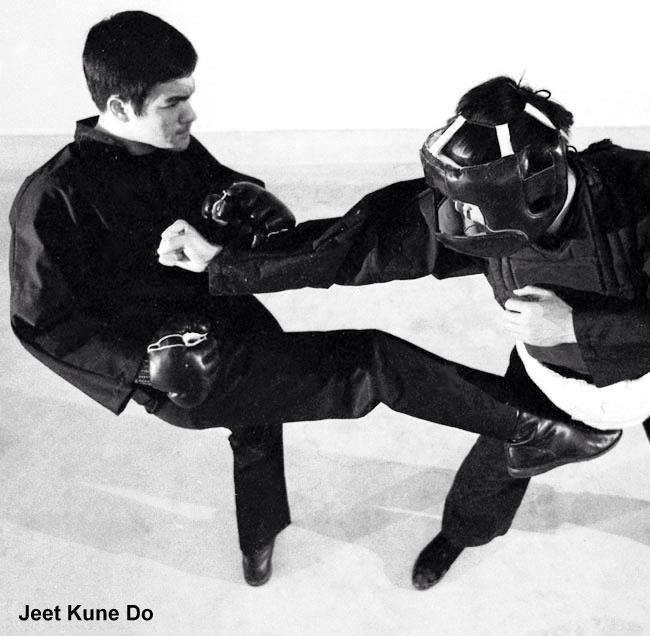
A SERIOUS MISTAKE IN ALL-OUT FIGHTING, ONE THAT BRUCE LEE PREACHED AGAINST AD INFINITUM, WAS LEAVING YOUR “SOFT TARGETS” OPEN AND, JUST AS BAD, NOT SYSTEMATICALLY ATTACKING THOSE AREAS— ESPECIALLY THE GROIN.
If you’re training for real-world self-defence, you should ask yourself if there is a primary and foundational emphasis upon attacking and defending this vital soft spot. If there’s not, then you have to ask the basic question: why not? Why would any enterprising individual forced to defend themselves, facing grave injury or death, not whack the bad guy in the village people? This question is especially pertinent to Jeet Kune Do practitioners who are supposed to be practising a science of self-defence, and what’s more scientific in combat than striking the enemy’s weakest target?
We aren’t practicing a self-defense science if we aren’t systematically attacking and defending the body’s weakest targets.
Across the modern self-defense landscape, there’s talk about simplicity and directness, yet there’s precious little whacking bad guys where it hurts the most. Back in Bruce Lee’s day, when Karate stylists stood in a closed-off stance, it was somewhat more difficult to get at that particular target— hence the point of that stance, after all.
However, nowadays, with the proliferation of sport fighting, there’s rarely any regard toward defending against groin attacks. Yep, it’s open season, if you’re so inclined.
The UFC, incidentally, is a highlight reel of how damaging groin kicks can be, and yet these are always accidental. Moreover, these wayward groin kicks are scored by a bare foot rather than a shoe, boot or sneaker.
As tough and well conditioned as these fighters are, when even an errant toe smacks them in their nether regions they are greatly reduced. Think about this for a second—some of the world’s most well-conditioned combat athletes are rendered defenceless by errant, rather than intended, strikes to their groin. And did I mention these combat athletes are wearing groin protection?
Well, if this doesn’t embolden you to become a real ball-buster (sorry, couldn’t help myself), then you aren’t paying attention to real world violence. One look at how much damage to “fair” targets some of these fighters can take should warn you off of throwing your primary strikes at well-padded areas. Your life might depend on this, right? Right?!
Well, stop messing around with sport tactics and get focused on attacking your enemy’s weakest targets. It’s the whole Death Star/Luke Skywalker thing, really, except that the bulls-eye isn’t so difficult to get at. And the dude won’t actually blow up (though one can always hope).
The amazing thing about it is, the vast majority of trained fighters are oblivious to the unpleasant reality that a quick, powerful shot to the groin can take them out. Drop them…and leave them at the mercy of more damage, or allow your escape (whichever is contextually correct in that particular self-defense situation). Consequently, most modern martial artists/sports-trained fighters have no systematic attack and defence for this area. Bruce Lee often referred to Western Boxing as “over daring” for precisely this reason.
Anyway, with all that said, Jeet Kune Do is a perfect set-up for below the belt attacks and we do this from both long and close range. The entirety of Lee’s fighting method is set up to use the lead hand and foot to attack the enemy’s weakest targets, which, of course, implies an integration of the ready position, footwork, tactics and striking tools.
Jeet Kune Do is not, repeat not, a motley mash-up of disparate systems thrown together where you say, “Ah, yes … we can kick the chap in his fellas too,” while firing off round kicks with your nerve-deadened shin bone.
The thing is, all practice is the practice of some theory, and the Jeet Kune Do theory is to use footwork and timing to diffuse the bad guy’s offense while using straight, non-telegraphic hits at the most vulnerable targets. We aren’t interested in finding out if we’re the better athlete. We aren’t interested in some macho competition. This is about survival. If you really need to compete, take up golf. Or tennis. Or chess. This whole nonsense about, “let’s see who’s the better man” in regard to violence is a wee bit morally whacky. Isn’t the better man the one whose family adores and trusts him? Isn’t the better man the one who has raised others up and has a proven track record of productivity throughout life?
Because of nonsensical ego tripping, we forget what self-defense is all about. And because of that, we jettison the training of JKD as it should and ought to be.
The lead hand and leg of the Jeet Kune Do fighter are the dominant offensive tools. The snap kick, which is a straight version of the Jeet Kune Do hook kick, can pulverise the enemy’s low-line before he responds. Today’s fighters, as already mentioned, have lots of experience using leg checks against round kicks. However, the Jeet Kune Do snap kick, often thrown at the end of a hand combination for extra stealth, whips up off the floor and shoots right at the target of the guy in the open (facing) stance. In Jeet Kune Do, the rear foot slides forward to gain range and replaces the front foot, which immediately fires at the exposed groin line. After the explosive, whip-like kick, both feet return to their original position (the visual image is a pendulum). This leaves you out of your ready position for the least time possible, which is of vital importance because who knows…you might miss. Or maybe the guy’s a Cyborg sent from the future to kill Sarah Connor.
I digress.
Seriously, though, every weapon thrown in Jeet Kune Do meets the critical requirement of blending in and out of the ready position with the utmost ease-—this kick included. This allows you to fire a multitude of strikes, on the move if need be, all while leaving you as small a target as possible. What’s not to like?
Should the fight enter close range, you should still be focused on hitting the guy in his most vulnerable areas. Short body shots such as hooks and uppercuts are easily converted to groin attacks and should be used at every opportunity. By using a Paak Sau or Lan Sau, one can hold and hit too, which works tremendously well since it disrupts the enemy’s balance and takes at least one limb away for defence. A side note: low blows don’t necessarily need to hit the groin to easily double the guy over or drop him.)
The critical point is this: Jeet Kune Do, being a fight science, not a combat sport, has an integrated system of protecting one’s most vulnerable areas while viciously attacking those of the enemy. Many people make a mistake of thinking they can mix Jeet Kune Do with sport-based approaches. Training practices, yes; tactical/technical points, usually not. If the aim is stopping the threat expeditiously, then one absolutely must consider the systematic attacks Jeet Kune Do offers to such vulnerable, fight stopping areas like the groin. And, remember, if you’re in a fair fight, your tactics stink.
Get My Free Pass
May 23, 2025
Defense Wins!! Learn How To Not Get Hit
You can’t lose a fight if you can’t get hit. This is why defense is the key to self-defense. Most schools miss this and focus on offense too much, but if we can’t shut down their attack it doesn’t matter how good our punches and kicks are.
All fighting is a clash of speed and power. So, what happens if you’re the smaller or (gasp!) even slower fighter in an altercation? For many, such would be a nightmare scenario, but it need not be if you’re well versed in logically sound defensive tactics.
Now, before we get started, let’s be honest.
Very few martial artists seriously contemplate and train with the idea of being outgunned in a fight. That’s a serious problem and shows how a form of ego takes over one’s self-defense training. Yes, we should be training to get stronger and faster, but no matter how hard you work, you still might not be the best athlete in a fight. That’s the thing about self-defense: we don’t get to choose our opponent. They choose us! Ego isn’t our amigo; we should be training to stop the other guy’s attack. This is unpopular due to the delusion of pride that infects many schools, but many times you don’t have to “win” the fight (insofar as sport rules are concerned). You merely need to not lose.
And that requires defense. Again, no matter how you look at it, if they can’t hit you, they can’t beat you. Good defense is the key for self-defense because that’s something that doesn’t demand that you’re bigger than your foe.
A few years ago, a Wing Chun friend of mine was watching some of my students train evasiveness (head movement, parrying and footwork), and he looked as if he’d just eaten something foul. “Are you kidding me?” he protested. “Why don’t they just step inside and cut the guy off, take his position, and blast him out of there?” He demonstrated what he meant, and it all looked wonderful, except he was leaving out some critical detail in his tactical analysis: He was well over 6’5 and around 240lbs. Of muscle. Rumor has it that he bench presses small family cars.
Naturally, this fella has rarely experienced the awful reality of being the smaller and weaker party in a fight or sparring match.
In trying to simplify, which is the art of narrowing down things to their foundational principles, we must avoid oversimplification, which is the omission of relevant detail. This well-intentioned Wing Chun man was guilty of this. He just couldn’t conceive of a world, where he wasn’t the big dog in the fight. It’s an easy error to make, but a potentially deadly one. The old Boxing adage is true: When a good big man hits a good little fella clean, the good little guy goes bye-bye. That’s why there are weight classes in Boxing and MMA.
A good example of this was Mike Tyson. We don’t think about this often, but Tyson was a small heavyweight, often giving up several inches in critical height and reach. This being the case, vintage Tyson spent the vast majority of his training time on being elusive. Yes!
“Iron Mike” Tyson, at his best, was a defensive wizard.
He trained head movement, head movement, and more head movement.
His brilliant original trainer, Cus D’Amato, had a basic rule for him: Move your head before and after every punch. This was steeped in the old boxing adage that if you don’t move your noggin, your opponent will move it for you!
When Tyson was Tyson—a dynamic and wondrous machine of destruction— he was virtually impossible to hit. When he stopped being so elusive, however, and charged straight into the pocket, his effectiveness plummeted.
So, as you can see, developing footwork and head movement can prove invaluable, because if you have the upper body movement of a heavy bag, you better be able to take as much damage, too. And it isn’t about fighting defensively. It’s about being smart. It’s about being elusively aggressive.
If your instructor is a great athlete and no one in the school can compete with him, that’s nice and inspirational and all that. Sure. Good for him. But what does that do for you? Self-defense isn’t a spectator sport. It’s about what you can do and your super-athlete instructor or Sifu isn’t going to fight for you. Nor are you able to fight like him. This is precisely why a truly logical self-defense school places a premium on counter-attack, evasiveness, and defense. Always.
Anyone who takes a precursory glance at Bruce Lee in action can tell he was greatly influenced by these truths. Many who worked with him spoke, not only of his almost preternatural speed and power, but also of the near impossibility of hitting him with a clean shot when sparring. Lee knew that swapping blows with big men, when he was only 130ish pounds or so, was a recipe for disaster.
If you’re new to the world of head movement and evasion, start with a mirror to learn good form. There are three ways to move your head and evade a punch. First, you can change the angle by moving your upper body, so your chin is in line with your knee. This keeps your head at the same level, but changes the line and is called “Slipping“. Next, you can change your level by “Ducking” straight downward. This is achieved by bending the knees and moving straight down. Allow your waist to “bow” just a little naturally as you duck. As always, your chin does not pass your knee-line (with the duck, the imaginary line between your knees), or you’ll be off balance. Last, you can also change level and angle by “Bobbing“.
With the bob, you’re doing an angled duck, and that’s what a bob really is—a fancy duck. Again, don’t let your chin go past your knee. A “Weave” is simply a sliding motion to change your angle from one knee line to the other.
Head movement is really upper body movement. As the shoulders slide, turn or drop, they carry the head out of the way of a blow. Calling it head movement is really a misnomer, as you can see, because if the head moves without the body, something truly bad has happened. Yeah…you’re probably dead. I’m not a doctor, but our body and head generally need to stay connected.
Once you have the hang of this, by practicing in front of the mirror, move on to having a partner gently toss punches at you. Keep it simple and slow until you get the hang of it and then add footwork.
Ultimately, good head movement should be lightning quick and smooth. Get back to your ready position as soon as you can so you can counter attack.
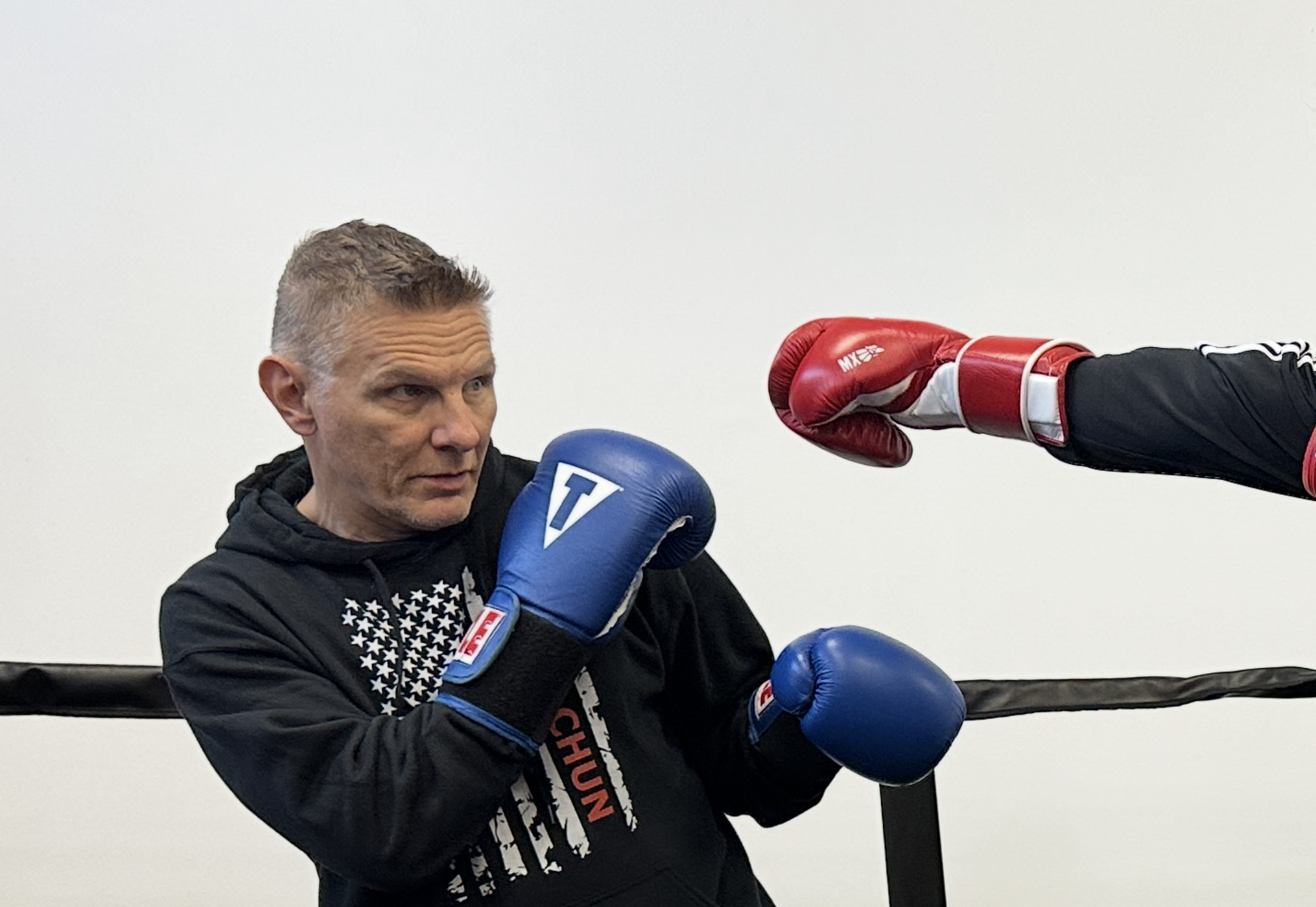
Last, at the advanced stages, get in the ring with a boxer and have them throw punches at you (wear appropriate protective gear) and focus on evasion and defense. Many of my Wing Chun students do this and focus on not getting hit, while they work for a clinch, which is exactly where they want to fight…inside. The thing is, getting inside, without getting KO’d, is harder than many people think. Either way, though, having a great defense is a tremendously valuable asset for any fighter. If your primary game is “long,” then use the evasiveness tactics to snipe with jabs, eye-jabs, groin and knee kicks.
Remember, no matter how tough your enemy is, he can’t do what’s physically impossible: He can’t hit what’s not there. And being aggressive doesn’t mean being reckless.
Get My Free Pass

April 25, 2025
Use Your Head…as a Weapon!
Two things right off the bat.
First, when we say head-butt we don’t mean the imprudent and dangerous type you see in the movies. That’s a head-smash, which is a foolhardy and reckless means of using one’s melon. Literally smashing your brain-cage into anything is as bright an idea as trying to change someone’s mind on social media. And almost as dangerous. Don’t do it.
There was a singularly wise government plan in the 80’s to stop the use of illegal drugs. “Just say no.” It was, as all government ideas usually are, wildly successful and money well spent. Illegal drug use plummeted because people had never thought to just say no. Indeed, the land rejoiced and inner cities here in America became as peaceful and bucolic as a farm on a green Vermont hill.
Okay…well, that didn’t actually happen, of course. But they tried. Getting back to reality, and the issue at hand (or head), we’d like to co-opt that vacuous slogan and put it to good use. Just say no to the head-smash. A real head-butt has nothing to do with a head-smash. They’re like the difference between a skilled surgeon and Jack-the-Ripper. To be clear on the difference is to answer the usual objections to the head-butt by those who value their brain cells. They’re right. We do too. But we aren’t talking about the same thing because what they’re objecting to (rightly, we add) is the aforementioned head-smash. The real-deal is surgical. It’s a subtle and opportunistic action with huge upside.
And this brings us to the second point, which is that the recipient of an honest to goodness head-butt isn’t going to fare well. That’s more movie stuff, by the way. We see it all the time. There’s a fight and one of the guys winds up, pulling his head waaaay back, crossing time zones, and then BAM! The poor victim of the celluloid head-smash is taken aback, surely, but they’re always A-OK afterward and keep fighting. And not only do they keep at it, but there’s virtually no sign whatsoever that they just ate a hard skull moments ago. For all intents and purposes they may as well have done nothing more than sneeze.
Yeah, we all know that movies aren’t very good at depicting the reality of life, much less combat. Nevertheless, it’s quite easy to be influenced by them for the simple reason that we see it all the time. Movies and martial art demos are like porn for the self-defender. They fill our minds with woefully unrealistic expectations.
To that end we give you a few critical truths of one of the in-fighter’s greatest tools: the head-butt.
In reality, the actual head-butt is like a jab. A real head-butt is a quick smack with the top of your head. It’s an opportunistic thing and almost always done from the clinch, never from the outside.
Moreover, the target is the other guy’s face. As obvious as this seems it doesn’t go without saying. We should never use our forehead as a weapon nor should we target his.
A proper understanding of the in-fighter’s crouch and the scientific use of positioning cuts down on available targets for the enemy and opens up some for you. With careful practice you’ll gain a positional advantage on the inside through which you can hold-and-hit, especially to the lower abdomen and groin (great targets for short, but powerful punches), and menace the bad dude’s face with the top of your head. The head-butt is always done slightly upward and/or sideways, never down. The reason for this is all about the angle of contact. If the enemy is shorter, or is in a deeper crouch, the head-butt is off the table. Don’t take the shot. Moving downward to the target increases the risk of striking his forehead (or head) and that’s as much fun as a car crash. Seriously.
In Jeet Kune Do in-fighting the idea is to use the bridge/contact as a kind of “inside fighting measure.” In other words, the first order of business is to shut down the enemy’s offense. Some instructors illogically teach that you should be hitting all the time. But this neglects the defensive considerations necessary to stay safe. Grapplers and Muay Thai fighters use their respective clinches to smother the striking ability of their enemy and simultaneously set up their attack. Jeet Kune Do does the same thing. The difference is that in JKD we’re thinking of fighting without rules. It’s important to understand this point or else we’ll likely never have the opportunity to use this effective in-fighting tool. The JKD head-butt is a short-range weapon launched from a controlled in-fighting position that doesn’t compromise one’s defense or balance. It almost always requires some type of trap or clinch that momentarily immobilizes the enemy and leaves him unable to strike or grapple.
As with every other tool, the head-butt is used within its context and in combination with everything else. Footwork, trapping, pushing, striking, pivoting…it’s all in there even on the inside. Many of us, due to flawed presuppositions, get on the inside and illogically assume that everything stops. We’re grappling now, we tend to think. Or we think one-dimensionally. On the contrary, the skilled in-fighter is a whirlwind of combat science. By using the combination of paak-sao, laap-sao, lan-sao, angles, pivots, and careful positioning, the JKD in-fighter is able to fire brutal close-range combinations of dirty tactics. Low blows, head-butts, shin and ankle kicks…like a boxer’s one-two. Speed, power, control and lots of dirty, filthy stuff!
The best way to practice this is with a sparring partner you don’t like very much. Maybe he owes you money. Maybe he married the girl you wanted. Maybe he wears way too much Axe Body Spray.
No…but seriously…no matter how tempting all that might be, never spar with this stuff. So, how do we get good at it? Drills. Use the heavy bag to work on positioning and use the head-butt off of that. Never practice actually butting the bag, but put your head on the bag from your crouch position. To the uneducated it’ll look as though your using a short bob or duck, not an actual head-butt. Add light sparring drills to this where you work on bridging/tying up your partner in a non-contradictory manner, which is to say in a way that sets you up for good in-fighting.
It’s all about smart habits and reflexes developed through realistic but safe training. Now that’s using your head.
Get My Free Pass

April 21, 2025
Lessons from the Anthony-Metcalf Stabbing
Ego is the enemy.
It can get us killed. It can get us incarcerated for the rest of our lives too.
This is exactly the case with Karmelo Anthony and Austin Metcalf. The self-defense lessons are critical.
Seventeen year-old Karmelo Anthony stabbed 17 year-old Metcalf at a high school track meet in Texas on April 2. The life-altering issue that caused the conflict was Anthony sitting in the wrong section. And now one young man is dead, the other faces life in prison, and two families are ripped apart.
As it went, Metcalf told Anthony to move.
Anthony refused and reached into his bag and said, “touch me and see what happens.”
He had a knife.
Metcalf didn’t back down but insisted that Anthony move. In the end, Anthony stabbed Metcalf once in the chest and then fled the scene, leaving Metcalf to die there on that otherwise normal day.
We’ll let other people opine about and discuss the legality of Anthony’s claim of self-defense. What we’ll focus on is the fact that the altercation was so ridiculously avoidable. We’ll focus on the fact that all people – especially young men – must learn the principles of self-defense and abide by them.
First, all altercations have the potential to turn deadly. To risk escalation over something one isn’t willing to die for ahead of time is high folly. Therefore, always try and avoid and/or deescalate.
Second, nothing is ever gained by the use of violence. This doesn’t mean violence is wrong or that we should be pacifists. Clearly, a woman eye-gouging a rapist is morally correct in her action. But the “winner” in a self-defense situation gains nothing he/she didn’t already possess. If we applaud or approve of senseless violence, or define ourselves through it, we have serious issues of character.
Third, violence can only be used morally in the event of unavoidable threats to one’s safety. No other reason suffices for the use of force.
Fourth, in light of these truths, we must endeavor to leave the area if it becomes dangerous and/or try to alert the responsible authorities to the situation if you must stay. If Metcalf had simply left to get an authority figure, he might still be alive. If Anthony hadn’t refused to follow the rules of the meet and left the area he didn’t need to be in, he wouldn’t be facing life in prison.
If these principles had been applied, there would have been no fight. Metcalf was certainly correct that Anthony had no right to be where he was. That’s true. But in getting drawn into a confrontation that led to his death, he functionally died over a seat.
A seat in a public place he didn’t own.
Metcalf was right but what good does that do for him now that he’s dead?
Something so trivial became a life-or-death matter because the principles of self-defense were violated. (Again: we aren’t getting into the legal arguments of the case. Our focus is on the teachable aspect we should all take to heart.)
For self-defense purposes, Metcalf should have regarded Anthony’s demeanor and threat to “see what happens” – not to mention the possibility that he had a weapon – as reason to go get an authority figure.
A teacher. A police officer.
We must teach our young this basic principle because it can avoid tons of trouble.
For his part, Anthony could have avoided the whole thing by getting up and leaving. His overall behavior begs serious questions about his character regardless of whether a jury finds him guilty of murder. He illegally brought a knife to a school event, sat in a restricted area, and then refused to leave when challenged. These are all clear violations of the common sense principles of self-defense that establish and maintain peace in society.
Furthermore, you can’t use lethal force – morally or legally – over a “simple” altercation. To use deadly force one must be in reasonable danger of death or great bodily harm. Unless there’s some evidence we don’t know yet – such as Metcalf pulling a gun or his own knife, for example – there’s simply no legal or moral justification for Anthony using lethal force. You can’t shoot someone who shoved you. Self-defense must be proportional to the threat it means to stop.
It looks very much like ego was a contributing factor to the altercation itself and then, due to Anthony having a deadly weapon, it escalated into a death. The law of self-defense teaches us that though conflicts in life are sadly inevitable, it’s each person’s responsibility to seek peace and only respond with violence to actual or inevitable violence.
For example, I can’t punch a dude in a Dodgers hat because I regard Los Angelas fans as insufferable knuckleheads whose team spends obscene amounts of money for players. Again: we can only use violence to stop imminent harm.
Young men need to be taught these basic and critical principles. Running one’s mouth and saying truculent things to a potential enemy has landed many a professing self-defender in jail. Telling someone, “I’ll kill you if you touch me,” is a far cry different from saying, “please leave me alone.”
Ego, anger, and stubbornness are alive within all of us and that’s something a true martial art program teaches us to control. Again: we aren’t blaming Metcalf for getting stabbed. That deadly act is Anthony’s alone and he will have his day in court. But as self-defenders, we must learn the nature of the beast, so to say. We must remind ourselves of these truths and apply them to our personal lives.
Stay safe.
To check out Sifu Jason’s YouTube video on this: